
Excursions
For Friday, 6 November 2026, we have planned four one-day technical excursions, each showcasing a different aspect of geotechnical engineering and infrastructure in the Netherlands and Belgium:
Flood Protection in the Rotterdam area,
Aggregate Production in the Amsterdam Port Area,
Engineering in Boom Clay in the Province of Antwerp (Belgium), and
Post-Mining Risk Management in Limburg, the southernmost province of the Netherlands, whose capital and largest city is Maastricht.
You can join one of our four one day excursions on Friday 06 November 2026.
Registration is mandatory and has to be done on the congress registration form. The tours will start and end in Delft. Transportation will be provided; coffee pauses and lunch will be organized. Dinner will be arranged for the most distant excursion. We will communicate the details of the logistics in due time. Note that a fee covering the transportation and catering will be charged for the excursions.
Our technical visits will have a minimum and maximum number of participants.
Places will be offered on a first-come-first-served basis.
In case your excursion cannot take place, you will be invited to join another visit or be refunded.
Explore the highlights of our technical excursions below.
If you have any questions, don’t hesitate to reach out to us at info@iaeg2026.org. Please use “IAEG2026 Excursion” as the subject. We will be happy to assist and make sure you get the most out of your experience!
Flood protection- 06 Nov 2026
Excursion Logistics
Transportation
Departure: 08:00 – TU Delft Aula
Modern 55-seater coach
Return: Approx. 18:00 – TU Delft Aula
Catering
Coffee / tea / snacks
Light lunch
Organisation & Safety
Logistics coordinated by two IAEG 2026 guides
Technical experts present on site
Clothing and footwear: common walks; weather-appropriate
No personal protection clothing required
Costs: 110 euro, including all above expenses
Registration
Online, part of IAEG2026 congress registration
Technical visits
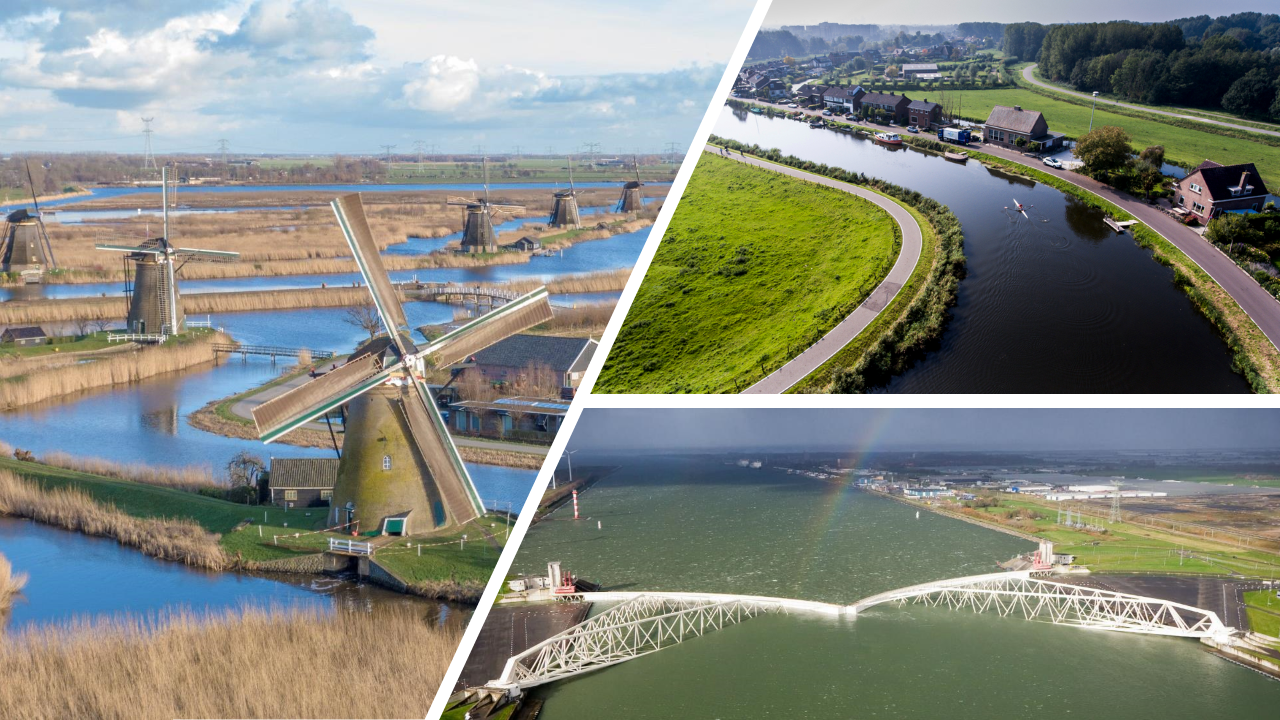
This excursion highlights the evolution of flood protection in the outer delta of the Netherlands, connecting centuries old practices with modern engineering innovations.
Our first stop is the river Rotte; the river name branding the city of Rotterdam (literally meaning “Dam on the Rotte”). This location offers a compact illustration of Holland’s landscape development, where historic water management practices intersect with contemporary urban and geotechnical challenges. We will visit the point where the Rotte crosses a highway and borders the “Bergsche Bos” nature area. This part of the program will be hosted by Michiel van de Meulen, principal geologist at the Dutch Geological Survey.
The second stop takes us to the UNESCO World Heritage site of Kinderdijk, an iconic example of early flood control powered by wind energy, with origins dating back to 1739. We will take a boat tour to one of the nineteen monumental windmills, many of which are operational. Visitors interested in exploring the inner workings of the mill may climb a set of narrow stairs to view the historic mechanical system. The site also features both historic and modern pumping stations.
Our last stop is the “Maeslantkering”, the storm surge barrier of the river Maas. This colossal structure, located near the Hook of Holland, is regarded one of the largest moving constructions in the world. Completed between 1991 and 1997 as the final element of the Delta Works, it forms a fully automated flooddefence system that protects the Rotterdam region, home to more than two million people, from severe North Sea storm surges.
Safety and Conduct Disclaimer
By participating in this excursion, you acknowledge that you must follow all instructions from guides and site personnel, wear appropriate shoes and clothes, and act responsibly at all times. You understand that visits include limited overhead space areas and uneven terrain, and may involve risks. You accept personal responsibility for your safety and health, and release the organizers, hosts, and technical experts from liability for accidents, injuries, or loss of personal property.
Note
The excursion involves stairs, a hill, and uneven surfaces. It may not be fully suitable for wheelchair users or those with limited mobility. Please contact the organizers at info@iaeg2026.org, Subject: IAEG2026X, for more information.
Aggregates - 06 Nov 2026
Excursion Logistics
Transportation
Departure: 08:00 – TU Delft Aula
Modern 50-seater coach
Return: Approx. 18:30 – TU Delft Aula
Catering
Coffee / tea / snacks
Light lunch
Organisation & Safety
Logistics coordinated by two IAEG 2026 guides
Technical experts present on site
Clothing and footwear: adapted to construction sites; weather-appropriate
Safety shoes, helmets, and safety jackets provided
Costs: 100 euro, including all above expenses
Registration
Online, part of IAEG2026 congress registration
Technical visits
The Netherlands faces a growing demand for construction materials, yet several natural resources are becoming increasingly scarce. While sand is still available, stricter regulations make extraction progressively more challenging. And because the country lacks hard rock, all coarse aggregates must be imported, making the reuse of materials from demolished structures a highly attractive and sustainable alternative.
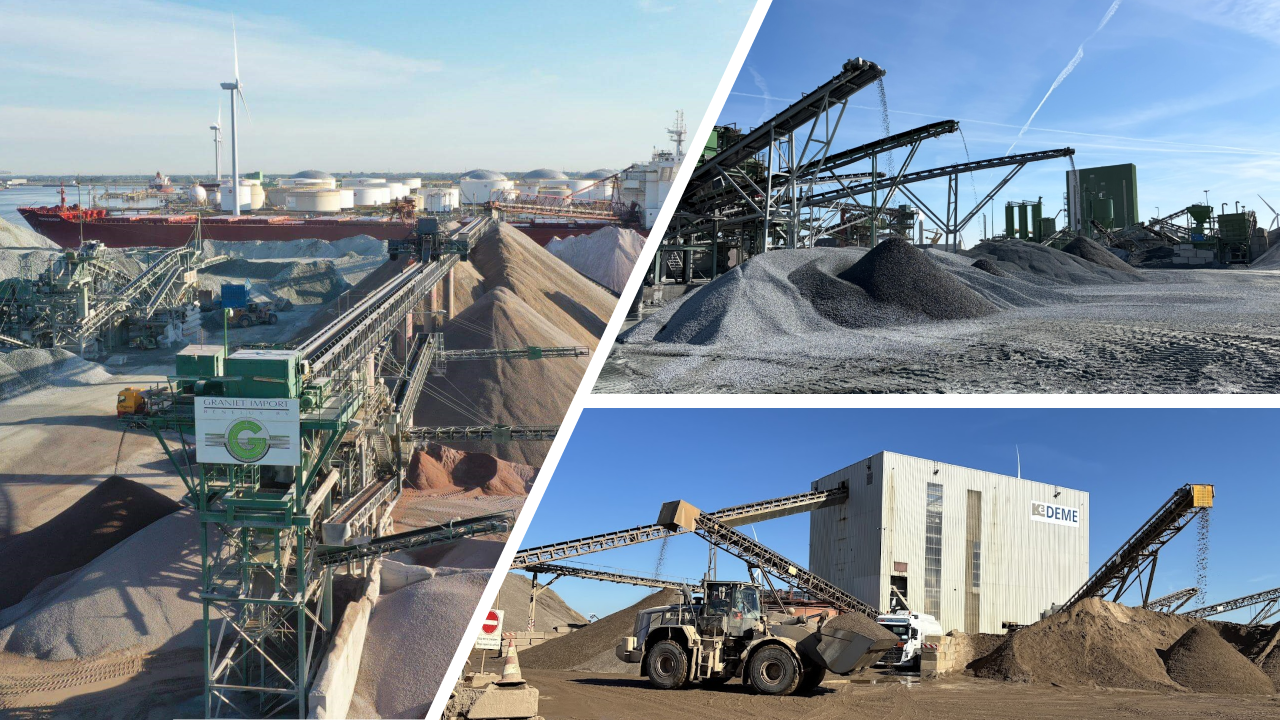
During this tour, we will visit several locations in the Amsterdam Port Area, each offering a unique perspective on the Dutch aggregate supply chain.
Our first stop is an aggregate production plant in the port of Amsterdam operated by K3Deme. Here they process marine gravelly sands excavated from a borrow area in the North Sea to an aggregate used in road construction and concrete structures.
From there it is a short walk to ARB, a company owned by Bontrup and partners that gives used asphalt a second life. Through a careful and controlled process, 'ZOAB' - open asphalt granulate that is commonly used in the Netherlands for its excellent drainage capacity - is reprocessed into a high-quality, certified aggregates for use in new asphalt surface layers.
The next stop takes us to Granite Import Benelux. This facility in the port of Amsterdam is the country’s primary hub for aggregate imports, with several companies operating quays capable of accommodating vessels of up to 400,000 tonnes arriving from Scandinavia and Scotland. Once unloaded, the aggregates are stockpiled and, when required, reprocessed and graded to meet client specifications. This visit will offer valuable insights into the large-scale logistics behind international aggregate supply.
After that it is a 20-minute bus ride to a materials recycling facility in Vijfhuizen. Here, construction materials from demolition projects and residuals from building sites are processed, sorted, and transformed into new raw materials. The plant reworks materials from demolition activities in the Amsterdam region for Dura Vermeer, a leading Dutch construction company.
Our final stop before taking the bus back to Delft is still to be determined.
Safety and Conduct Disclaimer
By participating in this excursion, you acknowledge that you must follow all instructions from guides and site personnel, wear appropriate shoes and clothes, and act responsibly at all times. You understand that visits include limited overhead space areas, construction sites, uneven terrain and activity near or on the water, and may involve risks. You accept personal responsibility for your safety and health, and release the organizers, hosts, and technical experts from liability for accidents, injuries, or loss of personal property.
Note
The excursion involves stairs, uneven surfaces and walkways. It may not be fully suitable and accessible for wheelchair users or those with limited mobility. Please contact the organizers at info@iaeg2026.org, Subject: IAEG2026X, for more information.
Engineering in Boom Clay - 06 Nov 2026
Only 3 places left. Register now before they are gone !
Excursion Logistics
Transportation
Departure: 07:30 – TU Delft Aula
Modern 50-seater coach
Return: Approx. 19:00 – TU Delft Aula
Catering
Coffee / tea / snacks
Light lunch
Organisation & Safety
Logistics coordinated by two IAEG 2026 guides
Technical experts present on site
Clothing and footwear: adapted to construction site and weather-appropriate
Safety shoes, helmets, and safety jackets provided
Costs: 130 euro, including all above expenses
Registration
Online, part of IAEG2026 congress registration
Maximum number of participants = 24
Technical visists
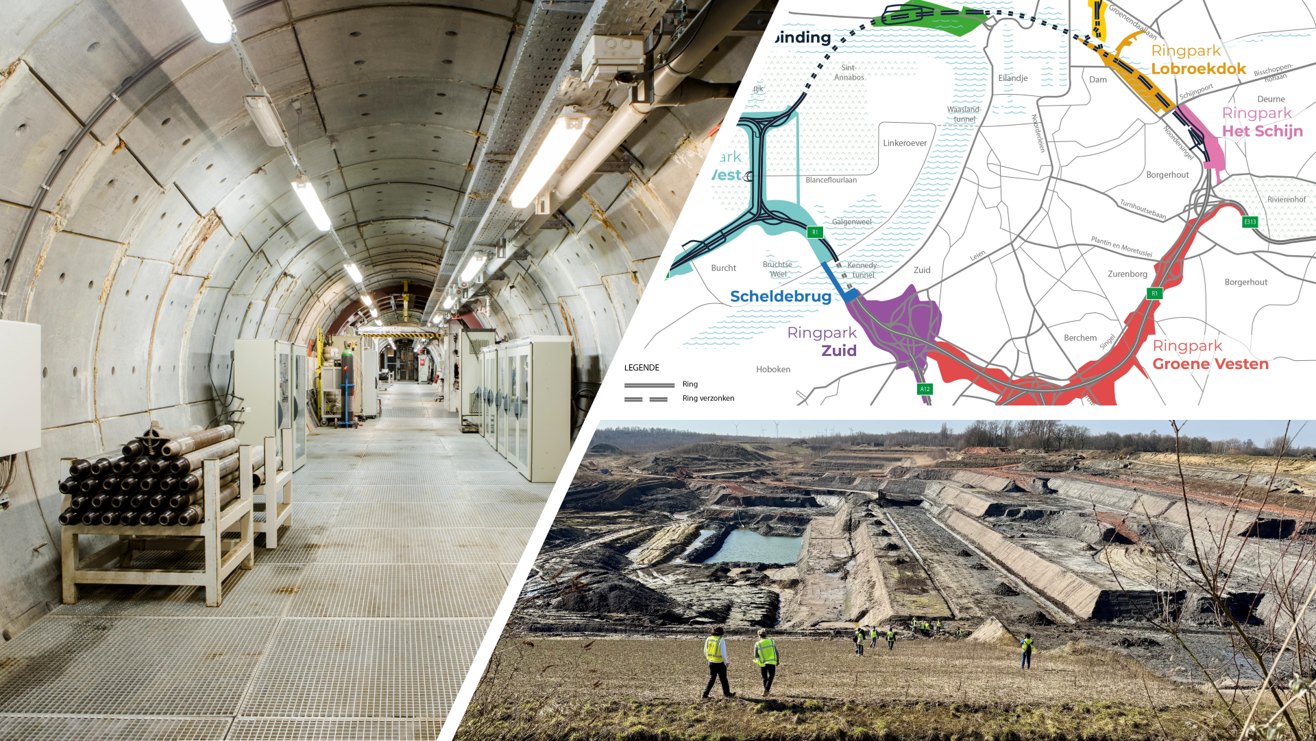
We will kick off the technical excursion with a geotechnical visit to the Oosterweel Link construction works on Antwerp’s Right Bank, part of the massive infrastructure project closing the Antwerp Ring Road. Here we can see major earthworks, deep diaphragm wall construction up to 60 m depth and the emerging sunken Ring Road and Canal Tunnels, critical elements linking the Scheldt Tunnel with the R1 road and reshaping urban transport infrastructure. Please note that the exact programme may be adjusted depending on weather conditions and the progress of the works. We may either take a closer look at the project during a two-hour walk or enjoy a coach tour of the site, with several stops at key observation points.
We will continue the day with a visit to HADES, Europe’s unique underground research laboratory in Boom Clay, where we will descend 225 m to explore full-scale geotechnical experiments investigating the interactions between host rock, engineered barriers, and waste. This immersive visit offers direct exchange with experts and a rare look at deep clay behaviour under real conditions, demonstrating how cutting-edge research supports safe underground design and how engineering geology tackles complex subsurface challenges.
Safety and Conduct Disclaimer
By participating in this excursion, you acknowledge that you must follow all instructions from guides and site personnel, wear provided safety equipment, and act responsibly at all times. You understand that visits include underground facilities, construction sites, and uneven terrain, and may involve risks. You accept personal responsibility for your safety and health, and release the organizers, hosts, and technical experts from liability for accidents, injuries, or loss of personal property.
Note
The excursion involves stairs, uneven surfaces, and underground areas, and may not be fully suitable for wheelchair users or those with limited mobility. Please contact the organizers at info@iaeg2026.org, Subject: IAEG2026X, for more information.
Post-mining risk management - 06 Nov 2026
Excursion Logistics
Transportation
Departure: 07:30 – TU Delft Aula
Modern 55-seater coach
Return: Approx. 21:00 – TU Delft Aula
Catering
Coffee / tea / snacks
Light lunch
Dinner
Organisation & Safety
Logistics coordinated by IAEG 2026 guides
Technical experts present on site
Clothing and footwear: sturdy walking shoes and weather-appropriate cloths
Underground temperatures are at a steady 12 degrees Celcius.
Costs: 170 euro, including all above expenses
Registration
Online, part of IAEG2026 congress registration
Technical visits
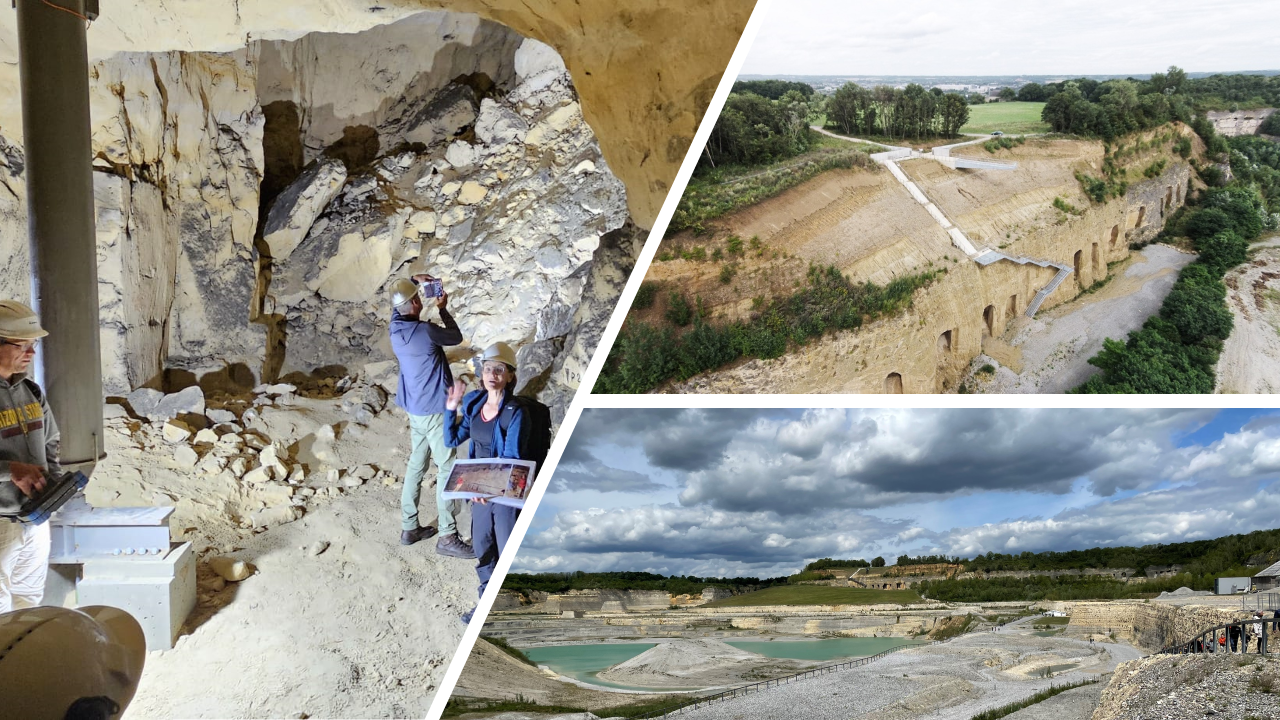
The tour begins with a 2.5 hour journey to Limburg in the south of the Netherlands. Here, we will explore the abandoned ENCI cement quarry and factory, an area where clinker was mined for more than 40 years. After the end of its industrial use, the site was transformed into a heritage area that is now open to the public.
During the visit, we will examine the engineering geological considerations involved in the post-mining process, from site abandonment to the installation of new structures for recreation. We will look at how decommissioning plans for quarry sites can be designed, from an operational facility to the careful handover to a new owner, while ensuring engineering geological safety throughout the process.
The restoration of the site has also created new ecological diversity, which will be highlighted and observed during our walk through the quarry. In addition, the location is known as the “Silver Spike” for the Maastrichtian: a unique opportunity to view nearly the entire stratigraphic sequence directly in the field.
Our second stop is Valkenburg-aan-de-Geul, a village famous for the caves beneath it that were created through historical underground mining of building stone. Here, we will explore the roomandpillar mining system and observe the resulting shapes of the underground supports that still carry the surface above.
In the past, cave-ins have occurred in this area. As a result, an engineering geological assessment of the pillars in the most critical mined zones has been carried out to evaluate room stability. Modern fiberoptic monitoring systems have been installed to detect deformation after older measurement systems reached the end of their service life.These systems now form part of an earlywarning network for potential instability, something we will have the opportunity to see during our visit.
Safety and Conduct Disclaimer
By participating in this excursion, you acknowledge that you must follow all instructions from guides and site personnel, wear appropriate shoes and clothes, and act responsibly at all times. You understand that visits include underground facilities, limited overhead space areas and uneven terrain, and may involve risks. You accept personal responsibility for your safety and health, and release the organizers, hosts, and technical experts from liability for accidents, injuries, or loss of personal property.
Note
The excursion involves stairs, uneven surfaces and underground areas. The sites are not accessible for wheelchair users or those with limited mobility. This excursion requires good health and physical shape. Please contact the organizers at info@iaeg2026.org, Subject: IAEG2026X, for more information.
